June 15th, 2016

Temporomandibular joint disorders (TMD) describe a set of conditions that involve trouble with your jaw and face muscles. They result from a problem in the temporomandibular joint (TMJ), which is a hinge that connects the temporal bones, in your skull in front of each ear, to your jaw. The joint enables you to talk, yawn, and chew by letting your mouth move.
TMD can be very painful and interfere with functions such as eating and speaking. This what to watch for and how to try to prevent TMD.
Risk Factors for TMD
You are at higher risk for TMD if you are a women than if you are male. The disorder is most common among adults between the ages of 20 and 40 years. Other risk factors for TMJ disorders include the following.
- Arthritis in the area, making movement more difficult
- Excessive tooth grinding, because it increases stress on the joint
- General stress, which can lead you to clench your teeth and strain facial muscles
Symptoms of TMD
Symptoms of TMD can last for just a short while, or for several years. Seeing Dr. Daniel Ma is important if your symptoms make it impossible for you to eat regularly or if you have unbearable pain or discomfort. The following symptoms can occur on both or one side of your face.
- Aching or very tired facial muscles
- Jaws that are fixed open or shut without you being able to unlock them
- Grating or popping sounds when you chew or close or open your mouth
- Pain in the entire area, including the mouth, jaw, neck, or shoulders, that comes on when you chew or yawn
Preventing TMD
You can try to prevent TMD by focusing on reducing risk factors. If you grind your teeth at night, ask Dr. Daniel Ma about wearing a mouthguard. If you are overly stressed, look into ways to better manage your stress and relax your muscles. Another strategy for trying to prevent the development of TMD is to avoid chewing gum, since that puts stress on your jaw.
If you have questions about TMD, don’t hesitate to contact our Vancouver, BC office.
June 8th, 2016

Bad breath, or halitosis, is probably not a matter of life or death. But it can make you feel self-conscious and have a negative impact on your life. The majority of people suffering from bad breath are dealing with oral bacterial. However, there are other causes of this embarrassing problem. Learning more can help you fight this solvable problem.
Five Causes of Embarrassingly Bad Breath
- Dry Mouth. A decrease in saliva flow can be caused by several things. Most often, medication or mouth breathing are the culprits. As saliva helps wash away food particles from your mouth, it prevents bad breath. Dry mouth can be dealt with by stimulating salivation.
- Gum Disease and Poor Oral Hygiene. Not brushing and flossing well enough or with enough frequency can lead to gum disease, which leads to bad breath. Halitosis can be a sign that plaque is present on your teeth.
- Food-Related Bad Breath. Food particles that aren't brushed or flossed away attract bacteria that leads to bad breath. It's especially important to brush after eating strong-smelling foods, such as garlic or onions.
- Smoking and Tobacco. Tobacco is bad for your health, and that includes your oral health. Smoking or chewing tobacco can contribute toward the development of gum disease, as well as oral cancer.
- Mouth Infections and Other Medical Problems. A mouth infection, sinus infection or even the common cold can cause you to temporarily have bad breath. Even conditions such as diabetes and reflux can cause halitosis. It's always wise to see Dr. Daniel Ma to help determine the cause.
We are Your Ally
Even if you maintain good oral hygiene, it's important to see Dr. Daniel Ma at our Vancouver, BC office to deal with or avoid problems with bad breath. We can help you uncover the cause of halitosis, while also providing solutions that allow you to enjoy fresh breath without relying on mints and breath fresheners. As is the case with all things related to oral health, we are your number-one ally when it comes to eliminating the problem of bad breath.
June 1st, 2016

If you are wearing braces and are planning a vacation, our team at our office would suggest that you be prepared. We put together a list of items that will be handy to have with you at all times while you are out of town. They include:
- Toothpick, flosspick, or other interdental cleaners
- Travel toothbrush
- A water bottle or a mini bottle of mouth rinse
- Orthodontic wax to help with discomfort from protruding wires
- A small mirror for examining any possible issues in your mouth
Putting these items together in a “braces/oral hygiene kit” may be wise. You may even buy pre-made braces kits. Please ask us for more information.
If you happen to be on vacation and experience problems reaching our office, we suggest going online and searching for orthodontic practices in your area. Most orthodontists will lend a helping hand to another orthodontic patient and get him or her out of pain or discomfort.
We also suggest avoiding the following foods to prevent broken brackets and/or wire distortion while you are on vacation:
- Chewy, sticky, or gummy food
- Apples, pears, and other whole fruits (cut fruit into wedges before consuming)
- Bagels and hard rolls
- Corn on the cob
- Hard candies
- Hard cookies or pretzels
- All varieties of nuts, including peanuts, almonds, and cashews
Finally, if you are wearing clear aligners and happen to lose your tray, don’t worry! Simply put in either the previous tray or the next tray and contact us as soon as you get home!
Follow these tips and you can have a worry-free vacation! Please give us a call if you have any questions!
May 25th, 2016
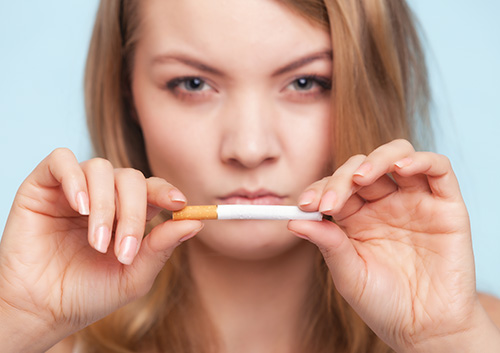
By now, everyone knows that smoking is bad for you. But the truth is its broad-reaching health effects are not all known by everyone. This is especially true of oral health. Smoking can have serious repercussions in this regard. To give you a better idea of how smoking can affect your oral health, Dr. Daniel Ma and our team have listed some issues that can arise.
Oral Cancer
Oral cancer can have steep ramifications for anyone that gets it. Surgery can be required to eliminate the cancer before it spreads to more vital parts of your body. Any type of cancer is about the worst health effect you can get, and this especially holds true to the affects that smoking has on your mouth. The type of mouth surgery required with oral cancer can leave your face deconstructed in certain areas, and it is all due to smoking or use of other tobacco products.
Tooth Discoloration and Bad Breath
At the very least, it is fair to say that as a smoker you will often have bad breath, and while you may try to cover it up with gum or mints, tooth discoloration is a whole other story. The chemicals and substances in cigarettes stick to your teeth staining them brown and yellow colors that are increasingly difficult to disguise.
Gum Disease and Loss of Bone
Another effect of smoking is the increased risk of gum disease. Your gums may start to recede, which can eventually lead to the loss of teeth. Smoking can also increase bone loss and density in your jaw which is vital to the health of your mouth. Gum disease and bone loss are two signs that smoking is definitely bad for your mouth.
When it comes to the health of your mouth, the question is not whether smoking affects your health, it's how does it affect your health and to what degree. If for no other reason than because smoking involves your mouth as its entry point, it is safe to say that it can have long-lasting and detrimental consequences on your oral health.
To learn more about smoking and your oral health, contact our Vancouver, BC office to schedule an appointment with Dr. Daniel Ma.

 Website Powered by Sesame 24-7™