February 17th, 2014
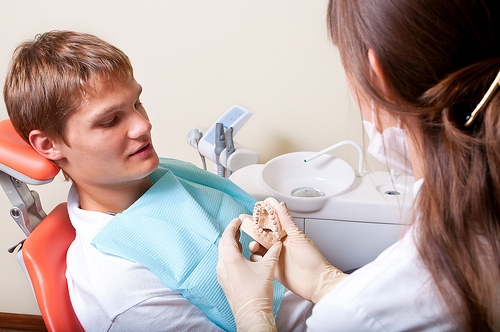
How You Can Start Preparing Now
When you first start thinking about going to the orthodontist, it is normal to feel apprehensive. What will your orthodontic experience bring? Whether you have been advised by a dentist or chosen to seek out orthodontic care from Dr. Daniel Ma on your own, there are a few things you can do to prepare for your initial consultation at our office.
One of the best ways to prepare for an orthodontic consultation is to understand your options. With so many choices available today, orthodontic care is a lot more versatile than in the past. You can start preparing now by seeking out and understanding those options. With a few specific things in mind, you can be totally confident and prepared for your consultation.
Questions to Ask During the Consultation
As you consider orthodontic care, it is likely that a few questions may naturally arise. Don’t be afraid to ask any questions you might have. Our orthodontic team is here to help. Here are just a few examples of questions you may want to ask at your consultation.
- Is there an estimated length of time that I will likely require braces?
- How much should I expect to pay for my treatment? What are the payment options?
- Does getting braces hurt? Is there anything I can do to prevent or minimize pain?
- Is it likely that I will be wearing extra appliances in addition to braces to correct my overbite or other problems?
- Are there specific foods I will need to avoid when I get braces?
- Will braces prevent me from playing my favorite sport or musical instrument?
- How can I keep my teeth clean with braces?
- How often will I be expected to come in for checkups and other appointments?
Once your consultation is over, you don’t have to feel like your options are exhausted. If questions arise after the consultation, don’t be afraid to ask. Our orthodontic team will be here to help throughout the entire process.
Confidence throughout the Process
With answers to your questions, and an orthodontic team on your side, you can be confident about any necessary orthodontic treatments. From the initial consultation to the day your braces come off, your orthodontic treatment at our office can be a smooth and simple process. The moment you see that beautiful smile, you’ll know it was all worth it.
We love bringing nothing but the most amazing smiles to our patients!
February 10th, 2014
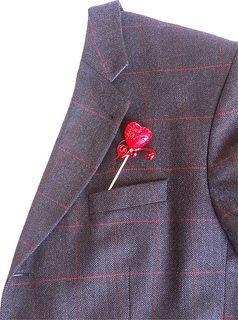
Did you know the actions leading to the beginnings of Valentine's Day were actually centered on the avoidance of war? A Catholic priest named Valentine defied the orders of the Emperor Claudius II and secretly married young men and their brides after the emperor had declared it illegal because only single, young men could be sent to war. Rather than lose potential soldiers to fight his war, Claudius attempted to hoard them by proclaiming marriage illegal.
Valentine continued to marry young couples anyway and, eventually, was put to death for it in 270 AD. Before his death, he sent a letter to a secret love and signed it “From your Valentine”. Nearly 1,800 years later, people are still signing letters and cards in this manner. This year, carry on the tradition started long ago, while adding your own twist. Here are a few suggestions.
Simple and Creative Valentine's Day Ideas
- Memorialize it with a Photo. Couples often have photos taken around Christmas, but Valentine's Day photos allow you to capitalize on romance. Famous couple Julia Child and her husband, Paul, had their picture taken together every Valentine's Day and included their sense of humor with silly props.
- Return to Your First Date Location. Even if your first date together was at a local hotdog stand, its sentimental value can make it a fun part of your Valentine's Day agenda. Be creative and make a treasure hunt with clues that lead your partner to the original date location, where you can express your love with flowers or a gift.
- “From Your Valentine” Messages. Deliver your message in a creative way to make this Valentine's Day stand out from the others. Bake your partner's favorite treat and write a message on it with a tube of icing, or draw a note on the steamed up mirror so it shows up when your partner takes a shower.
Although Valentine's Day is a day to celebrate love, it doesn't have to be a special day only for couples. If you're single, use this special day to shower yourself with love, because you're worth it! After all, the priest Valentine believed so strongly in the sanctity of love that he was willing to risk his life for it. Whether you're in a relationship or single, young or old, romantic or not, Valentine's Day is for you. Happy Valentine’s Day from the orthodontic office of Dr. Daniel Ma.
February 3rd, 2014

Most parents know that routine dental care should begin during their child’s toddler years. And many assume they must wait until their child has all of his or her permanent teeth to visit Dr. Daniel Ma for an initial orthodontic consultation.
The ideal age for an orthodontic evaluation is age seven. At that age, your child will have a mixture of adult and baby teeth for Dr. Daniel Ma and our team at our office to make a determination about whether any problems are present. Typically the first molars have come in by the time your child turns seven, giving us an opportunity to check for malocclusion, also known as “bad bite.” Also, by the time your child reaches the age of seven, the incisors have begun to come in, and problems such as crowding, deep bites, and open bites can be detected.
When Dr. Daniel Ma and our team perform an evaluation on your child at an early age, you get one of two positive outcomes. Although treatment usually will not begin until one to five years after the initial evaluation, it’s still helpful in determining whether your child has any problems with the jaw and teeth early when they are still easy to treat. Earlier treatment can also cost less to correct a potential problem than delayed treatment.
Early evaluation, of course, may signal a need for early treatment. For some children, early treatment can prevent physical and emotional trauma. Aside from spurring years of harmful teasing, misaligned teeth are also prone to injury and are detrimental to good oral hygiene.
If your child is approaching age seven, or has already surpassed his or her seventh birthday, it is time to schedule an appointment for an initial examination at our office.
January 27th, 2014

Great question! Tooth movement is your body’s natural response to light pressure applied by braces over a period of time (usually two years). Braces work by using brackets that are glued onto your teeth; these brackets have small slots, and that is where Dr. Daniel Ma and our team insert orthodontic wires. These wires are held in place by small elastic ties that fit around the brackets. As time passes during your treatment, these wires apply pressure on your teeth, which sets in motion the movement of your teeth into their desired positions. Each of your teeth has a different size and shape to them, as do the brackets. Each bracket is custom-made for the particular tooth on which it’s supposed to fit.
Not long ago, orthodontists had stainless steel wires and that was about it. Today, however, we have a number of different high-tech wires at our disposal to move your teeth faster and more comfortably.
When you first get your braces on, the first wire or two will typically be very flexible, but still strong enough to apply a constant force on your teeth. As your teeth straighten out over time, however, Dr. Daniel Ma will use progressively thicker and firmer wires to help move your teeth in place for an ideal bite.
Every time you visit our office for an adjustment, we will swap out the wires in order to keep putting pressure on your teeth, which is why it’s so important for you to keep your adjustment visits during your treatment. Most adjustment appointments are scheduled four to eight weeks apart to give your teeth time to move.
As for rubber bands and elastics, most of our patients will need to wear elastics or rubber bands at some point during their treatments. These elastics typically go from one or more of the upper braces to one or more of the lower braces, and pull on your teeth to move them in the direction they need to move in order to achieve an optimal bite.
If you have any questions about wires, brackets, or elastics, or have any general questions about your treatment, please give us a call at our Vancouver, BC office.

 Website Powered by Sesame 24-7™