Our Blog

Do I really need to wear my rubber bands with my braces?

September 6th, 2013
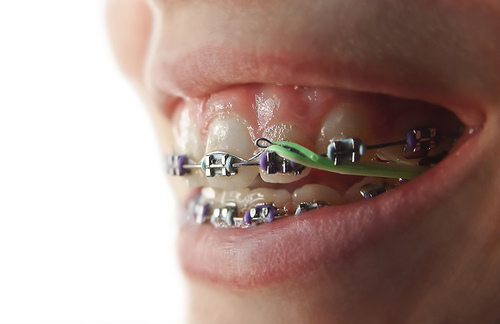
Most of our patients at our office will need to wear rubber bands at some point during their orthodontic treatment. The main reason our patients are instructed to wear rubber bands is to correct their bite. If your teeth do not fit together properly, Dr. Daniel Ma will recommend that rubber bands be used. Dr. Daniel Ma may also recommend using rubber bands to close or open spaces.

Rubber bands are a critical part of your treatment, and wearing them as Dr. Daniel Ma and our team recommend will help move your teeth into the desired position. Dr. Daniel Ma may ask you to wear your rubber bands full time, meaning that they should only be taken out when you brush and floss your teeth three times a day. Other times, you may be asked to only wear them part-time, like only during the day or only during sleep.

If you still have any questions about orthodontic rubber bands, we invite you to give us a call or ask us during your next adjustment appointment. Remember, wearing rubber bands as prescribed by Dr. Daniel Ma is an important step during your treatment, and can reduce the time you have your braces. If you lose your rubber bands or run out, stop by our Vancouver, BC office and pick up more!
The Evolution of Braces

August 30th, 2013

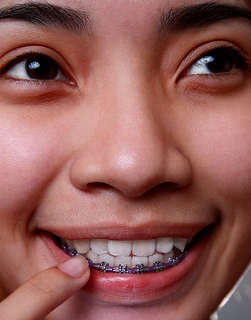
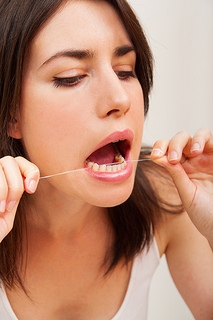
Did you know that even in ancient times, people wanted to improve the look and function of their smiles? our office thinks of modern orthodontic appliances as sleek, efficient technology, but this was not always so! Take a look at the highlights in the evolution of braces.

Ancient Times: From Greece to Rome

  • According to The Angle Orthodontist, Aristotle and Hippocrates first thought about methods for straightening teeth between 400 and 300 BC.
  • The Etruscans, in what we now know as Italy, buried their dead with appliances that maintained spaces and prevented collapse of their teeth and jaws during life. Archaeologists have discovered mummified remains in various locations that have metal bands wrapped around the teeth.
  • A Roman tomb has also been discovered in which the teeth were bound with gold wire, including documentation on the wire’s use as a dental device.

18th Century: A French Development

  • The French dentist Pierre Fauchard is acknowledged as the father of modern dentistry. In 1728 he published a book that described various methods for straightening teeth. Fauchard also used a device known as a “blandeau” to widen the upper palate.
  • Louis Bourdet was another French dentist who published a book in 1754 that discussed tooth alignment. Bourdet further refined the blandeau and was the first dentist to extract bicuspids, or the premolar teeth between canines and molars, for the purpose of reducing tooth crowding.

19th Century: Orthodontics Defined

  • Orthodontics started to become a separate dental specialty during the early 19th century. The first wire crib was used in 1819, marking the beginning of modern orthodontics.
  • During this period, gold, platinum, silver, steel, gum rubber, vulcanite, and occasionally wood, ivory, zinc, and copper were used — as was brass in the form of loops, hooks, spurs, and ligatures.
  • Edward Maynard first used gum elastics in 1843 and E. J. Tucker began making rubber bands for braces in 1850.
  • Norman W. Kingsley published the first paper on modern orthodontics in 1858 and J. N. Farrar was the first dentist to recommend the use of force over timed intervals to straighten teeth.

20th Century: New Materials Abound

  • Edward Angle developed the first classification systems for malocclusions (misaligned teeth) during the early 20th century in the United States, and it is still in use today. Angle founded the American Society of Orthodontia in 1901, which was renamed the American Association of Orthodontists in the 1930s.
  • By the 1960s, gold was universally abandoned in favor of stainless steel.
  • Lingual braces were the “invisible” braces of choice until the early 1980s, when tooth-colored aesthetic brackets made from single-crystal sapphire and ceramics became popular

Today

As we arrive in the present, you need only look at your own braces to see how far we’ve come. Your treatment plan was probably created with a 3D digital model, and we’ve likely used a computerized process to customize your archwires. Perhaps you have clear aligners, self-ligating brackets, or highly resilient ceramic brackets with heat-activated wires.

Orthodontics has come a long way from the days of Aristotle, and even the bulky wrap-around braces of just 60 years ago. Regardless of your specific treatment plan, the development of high-tech materials and methods has made it possible for your orthodontic experience to be as effective, efficient, and comfortable as possible. Call our office in Vancouver, BC to schedule your first orthodontic consultation!

http://www.angle.org/doi/full/10.1043/0003-3219(2002)0722.0.CO;2 http://www.archwired.com/HistoryofOrtho.htm

Four Tips for Soothing a Toothache

August 23rd, 2013

Whether it’s a dull and throbbing ache or a sharp pain, toothaches can come in many different forms. Chances are you’ve had the discomforting experience once or twice in your life. It’s the type of experience that nobody wants to have, because a toothache can be as annoying as fingernails scratching a chalkboard.

What’s a good way to describe a toothache? Let’s see … your mouth feels as if it’s being besieged by one of those Loony Tunes-style jackhammers. As fate would have it, toothaches always seem to occur over the weekend or after-office hours, leaving you to suffer and forcing you to cancel your reservation at that high-end restaurant you’ve been anticipating all week.

Not so fast!

While you’re probably going to want to skip the rib-eye steak, there are numerous tried-and-true home remedies you can use to ease the pain until you can make an appointment with our office. Here’s a look at four ways to soothe a toothache.

  • 1. Don’t underestimate the power of salt water. Rinsing your mouth with warm salt water will both soothe your toothache and disinfect your mouth. However, make sure the water is warm; cold water can further exacerbate a sensitive tooth. Follow up the saltwater rinse by swishing your mouth with hydrogen peroxide.
  • 2. Clove oil, eucalyptus oil, peppermint oil, and vanilla extract are proven to be comforting elixirs. Dip a cotton swab in one of these mixtures and apply it to your tooth and gums. These substances, which you may even have in your kitchen cupboards, are known to have pain-relieving qualities. For the best results, repeat the application throughout the day.
  • 3. Eating yogurt is good for toothaches and mouth pain. Yogurt is filled with healthy bacteria that combat pain. Afterward, place a cold compress on your jaw.
  • 4. Try flossing. Your toothache might be throbbing and severe, but there’s always a chance the pain is caused by a piece of food awkwardly lodged in your teeth.

We hope that helps! Give us a call to learn more!

I got my braces. Now what?

August 16th, 2013

We love when patients ask us that question! Now that you’re wearing braces, it’s even more important to maintain a good oral hygiene regimen as you begin your orthodontic treatment.

Braces are known to trap food particles and make it difficult to brush or remove plaque, which is why our team at our office recommends that you brush and floss after every meal. We also encourage you to use a proxabrush to help with the smaller areas where your toothbrush doesn’t reach. The use of a fluoride rinse is recommended as well; ask Dr. Daniel Ma for a recommendation.

When your braces are initially placed, your teeth are likely to be very sensitive. You may experience discomfort for up to three to five days, which is why we encourage you to eat soft foods during that time. Remember, the less pressure you put on your teeth, the less discomfort you will have.

You may also be thinking, “Okay, so what can I eat?”

Here are a few soft foods that do not require you to do much chewing and are easy to chew on when your teeth are sore:

Ice cream, yogurt, pudding, cool soups, Jell-O, scrambled eggs, cream of wheat, baked potatoes, soft cooked pasta, soup, bananas, cottage cheese, smoothies, macaroni and cheese, pancakes, soft cheeses, and milk are all foods you can eat safely without having to worry about pain or breaking your brackets.

Dr. Daniel Ma, as well as our team at our office will tell you it’s crucial to regularly check your braces for bent or loose wires and brackets. In the event of a loose/broken wire or bracket, please call our Vancouver, BC office immediately to schedule an appointment for repair.

Lastly, in addition to visiting our office during your orthodontic treatment for adjustments, you should visit your dentist for professional checkups and teeth cleaning appointments about every six months, or as recommended by your dentist.

Questions? Please let us know below, on our Facebook page, or by giving us a call!

Back to Top